Why sealant on EIFS never bonds straight to raw finish
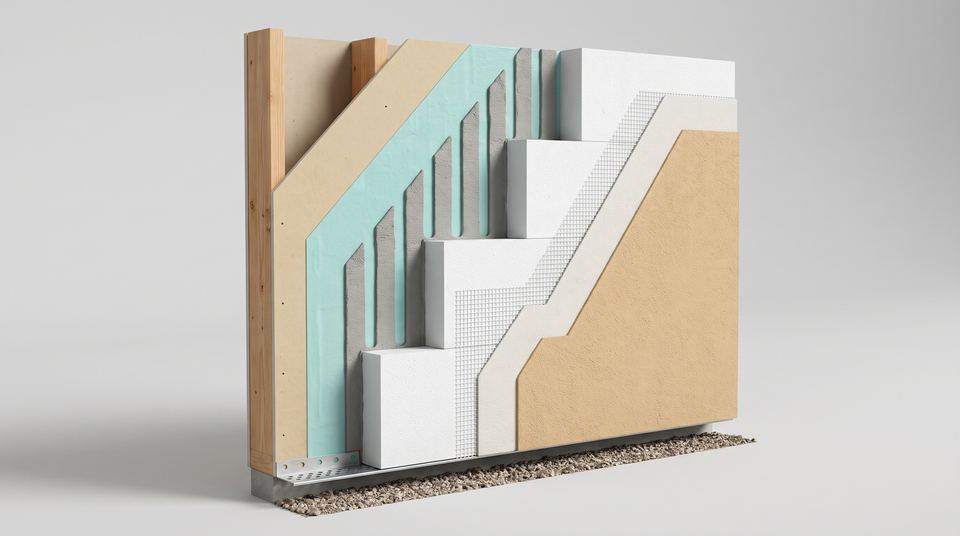
On a brick or precast building, a caulking mechanic can grind out a mortar joint and tool fresh sealant directly against masonry. EIFS works differently. Its outer color coat is a thin textured acrylic layer sitting over a cementitious or polymer-modified base coat and expanded polystyrene foam. If sealant is gunned straight onto the textured finish coat, seasonal thermal movement pulls on that thin outer skin until it softens in wet weather and peels right off the wall, leaving an open slot behind a bead of caulk that still looks intact from the sidewalk.
Proper EIFS joint work bonds to the reinforced base-coat return, never to bare foam and never solely to textured finish. When our crews cut out failed perimeter or expansion joints, we slice cleanly without sawing into the underlying mesh, clean and abrade the return down to sound base coat, repair any nicked return edges first, and apply manufacturer-specified primer before tooling new sealant.
Joints we cut out and reseal on city buildings
Even a well-installed EIFS facade needs its flexible joints replaced roughly every ten to fifteen years, especially on sun-baked south and west exposures or windy upper floors. Across Manhattan, Brooklyn and Queens apartment and mixed-use buildings, we replace sealant at:
- Window and terrace-door perimeters, including head, jamb and sill transitions against aluminum or vinyl receptor frames.
- PTAC air-conditioner sleeves and mechanical louvers, a frequent source of apartment wall stains when sleeve perimeters split open.
- Floor-line and panel-to-panel expansion joints, which absorb structural movement and slab deflection between stories.
- Parapet coping joints, scuppers and roof-line terminations, where metal expansion breaks let water run down behind upper EIFS panels.
- Dissimilar-material transitions where EIFS meets brick piers, limestone bases, steel canopies, storefront mullions or light fixtures.
Two-sided adhesion, backer rod and joint profile
A sealant joint has to stretch like a rubber band anchored only at its two opposing edges. If sealant adheres to the back of the gap as well, known as three-sided adhesion, it tears as soon as the window frame or wall panel expands in summer heat or shrinks in January cold.
We size and set closed-cell polyethylene backer rod, or bond-breaker tape in shallow joints, so the sealant forms an hourglass cross-section roughly half as deep as it is wide. Unlike open-cell foam rod, closed-cell rod will not absorb water if punctured, though we use non-gassing rod carefully so outgassing bubbles never blister fresh uncured sealant. We install low-modulus silicone or EIFS-tested polyurethane sealants evaluated for compatibility with EIFS base coats under ASTM C1481 guidance.
Coordinating joint replacement with tenant windows
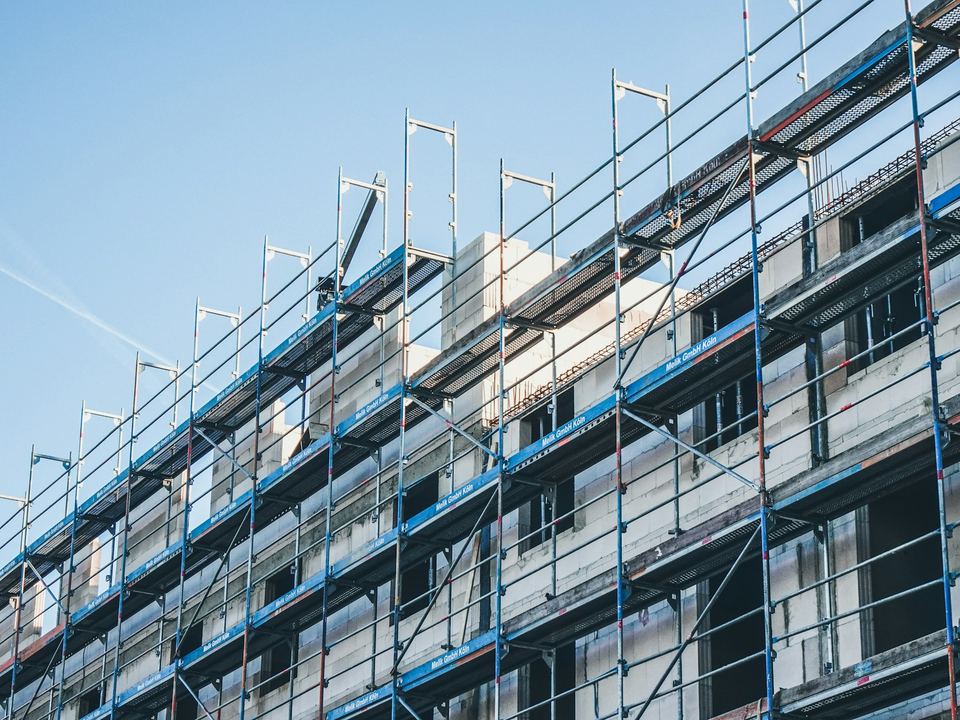
Recaulking an occupied apartment or condo building requires steady coordination with the super and property manager. Crews work drop by drop from pipe scaffold, boom lifts or suspended swing stages so only one vertical stack of windows is active at a time, giving residents advance notice to keep sashes closed while old caulk is cut out and new beads are tooled.
While on the drop, if we uncover soft substrate or cracked window corners behind failed caulk, we document the spot with close-up photos so any needed EIFS facade repair or elevation recoating can be handled before the rigging moves. Most EIFS sealants cure cleanly down to about 40 °F on dry, frost-free substrates, giving a slightly wider seasonal window than acrylic finish coats while still requiring dry joint surfaces.